
Policy for the Accelerated MBA Grading Standards and Cumulative GPA
1,406 views
Policy for the Accelerated MBA Grading Standards and Cumulative GPA
Welcome to the MBA Grading Requirement! Understanding the grading requirements and assessment structure is essential for academic success, as these elements directly impact your academic progress. Detailed evaluation parameters will be discussed throughout the semester.
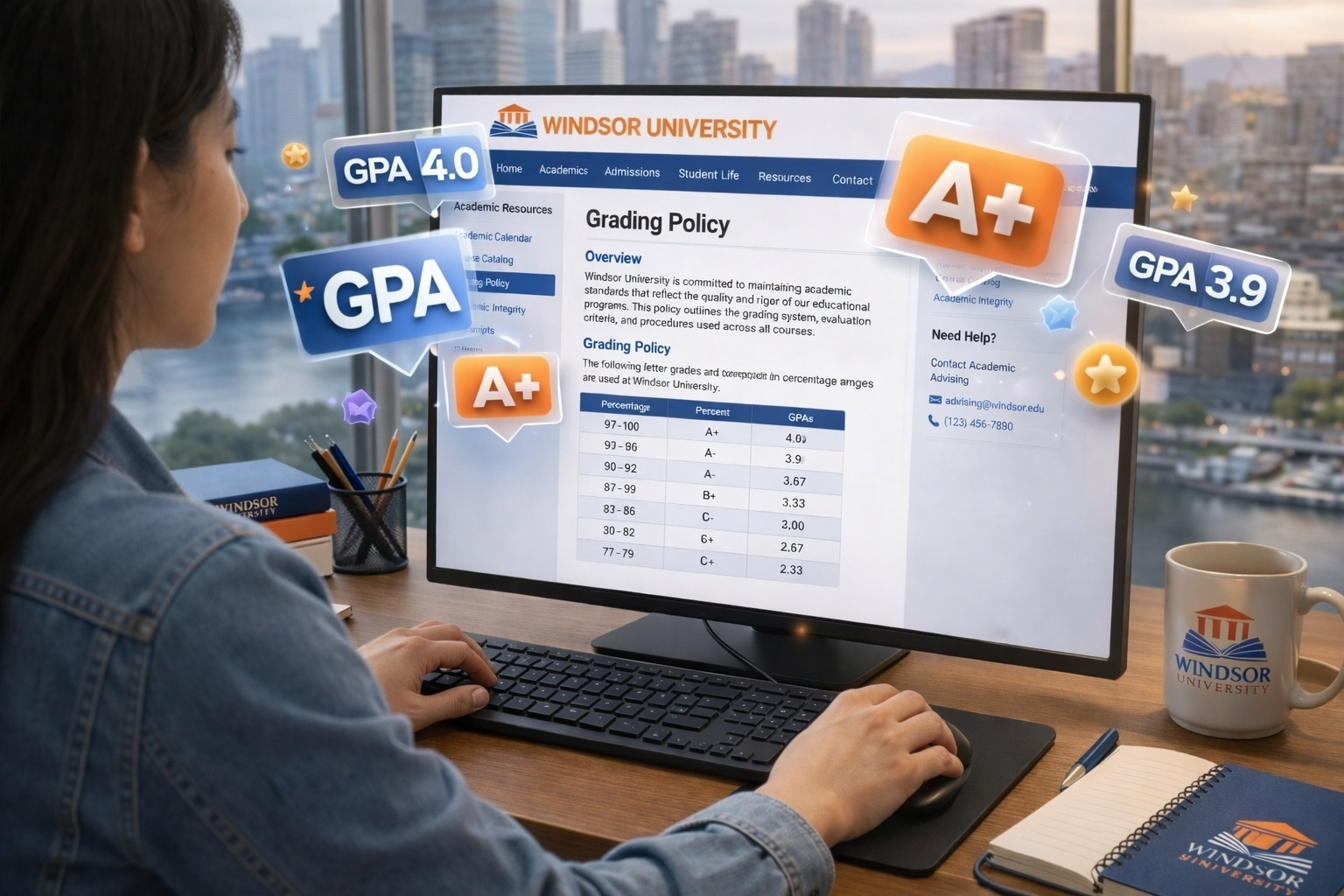
Grading Standards and Cumulative GPA
Norm-Referenced Grading System
Grades are assigned based on each student's performance compared to the group's performance on specific evaluations. This system ensures students are not at risk of low grades due to assessment difficulty.
Purpose
To establish grading criteria for core, elective, and thesis courses in the MBA program, ensuring students achieve a minimum cumulative GPA (CGPA) of 3.0 for successful program completion.
Grading Scale
| Percentage | Grade | GPA |
|---|---|---|
| 97-100 | A+ | 4.0 |
| 93-96 | A | 3.9 |
| 90-92 | A- | 3.67 |
| 87-89 | B+ | 3.33 |
| 83-86 | B | 3.0 |
| 80-82 | B- | 2.67 |
| 77-79 | C+ | 2.33 |
| 73-76 | C | 2.0 |
| 70-72 | C- | 1.67 |
| Below 70 | F | 0.0 |
Minimum Grade Requirements
1- Minimum Grade Requirements by Course Type
| Course | Minimum Grade | Action for Grades Below Minimum |
|---|---|---|
| CORE/ELECTIVE | 3 GPA, B (83%) or higher | Grade below B- (2.67 GPA) will require retaking course to remain in good academic standing. |
| THESIS | 3 GPA, B (83%) or higher | Failure to meet the required standard may lead to a request for revision or retake, as outlined in program policies. |
| MBA | 3 GPA, B (83%) or higher | - |
To successfully complete the 100% online MBA program, students must maintain a cumulative GPA of at least 3.0, which is equivalent to a "B" average. As outlined in the university's grading policy, core courses and theses are crucial to passing the program. The following section provides detailed information about the specific grading requirements and policies:
Core Courses:
Students must achieve a minimum grade of B (83%) or higher in each core course. Grades below B- (2.67 GPA) will require the student to retake the course to remain in good academic standing.
Thesis or Capstone Project:
Students must achieve a minimum grade of B (83%) or higher on the final thesis or capstone project. Failure to meet this standard will result in a revision request or retake, subject to program policies.
2- Calculation of Cumulative GPA (CGPA)
The CGPA is the weighted average of grade points earned across all courses, calculated as: CGPA = Total Grade Points Earned / Total Credit Hours Attempted.
Impact on CGPA: A grade of B in core courses and thesis ensures the student maintains a CGPA of at least 3.0.
3- Academic Standing and Remediation
- Good Standing: Students must maintain a CGPA of 3.0 or higher throughout the program.
- Probation: Students whose CGPA falls below 3.0 will be placed on academic probation and may be given one semester to improve their standing.
- Dismissal: Failure to meet CGPA requirements after probation may result in dismissal from the program.
4- Monitoring and Advising
- Periodic Reviews: Academic advisors will review student GPAs after each term.
- Support Services: Students at risk of falling below the CGPA requirement will be closely monitored by the professor. The professor will provide targeted support to address any underlying issues contributing to the decline in GPA. This support may include additional resources, guidance, and strategies to help the student improve their academic performance and meet the minimum CGPA requirement.
Passing Grades and Retake Policy
1- Passing Grades and CGPA Calculation:
Students must maintain a CGPA of 3.0 or higher at all times to remain in good academic standing and graduate. While individual grades may vary, students must not accumulate more than one grade below B- (2.67 GPA) across all courses.
2- Impact of a Single Low Grade:
A grade of C- (1.67 GPA) in any course will be accepted only if the CGPA remains 3.0 or higher by compensating with A or A+ grades in other courses. If a student receives a C- in a course, their academic advisor will review their performance to determine if a retake is necessary to avoid CGPA risk.
Retake Policy
If the CGPA falls below 3.0 due to a low grade, the student must retake some the course to improve their standing. Students are allowed up to two retakes during the program, with only the highest grade counting towards the CGPA.
Evaluation Structure
We aim to provide a fair, transparent, and consistent grading structure that aligns with course objectives and academic standards. Below is an overview of our assessment policy designed to evaluate student performance throughout the semester.
| Assessment Component | Description | Weight |
|---|---|---|
| Discussions/ Presentations/ Projects/ Case Study | Evaluations based on one project or case study, and one presentation (Optional according to course structure). | 40% |
| Assignments/ Quizzes/ Midterm Exam | Five assignments or quizzes that assess understanding of course materials, reinforce key concepts, and encourage critical thinking. | 40% |
| Final Exam (Open Book) | One open-book exam covering the full scope of the course material. The exam will assess the student's ability to apply concepts, analyze information, and solve problems effectively. | 20% |
| Total | 100% | |
Important Notes on Discussions/Projects/Case Studies/Presentations:
- The student must only have one project or case study and one presentation throughout the course reflecting the course's learning outcomes.
- These components should be completed in groups, with each group assigning one team leader who will serve as the main point of contact and communicate with the professor on behalf of their team.
- Students should have the option to attempt these components individually if needed, due to valid reasons such as time zone conflicts or other constraints.
- If a student is unable to present live due to time zone differences, they should be allowed to submit a recorded presentation instead.
- If a student is at risk of failing any assessment, the professor should reach out to offer support and allow the student to adjust and resubmit their project or case study.
- If the professor wishes to include in-class discussions or activities in the assessment, they should be counted as bonus marks only, and kept lightweight and on a limited scale.
Coursework Duration and Submission Policy:
All of the graded assessments for the course are hosted on Windsor University's learning management system, Moodle. Each assignment has its own open and accessible date period. For successful completion of the course, students must complete and submit all assignments by the due date that coincides with the last week of the semester. Late submissions will not be accepted. Extensions for late work must be requested via the Office of Student Affairs. Late work that is approved and accepted may be graded with penalty points, at the discretion of the instructor. The instructor will have three weeks to provide students with feedback and posted grades after each assignment submission unless otherwise stated by the instructor.
Late Submission and Extension Policy:
Submissions after the official deadline will not be accepted unless an extension has been formally approved by the Office of Student Affairs. Windsor University recognizes that students may face exceptional circumstances, such as medical emergencies, family emergencies, or personal hardship, that require deadline extensions. Students must submit a formal request for an extension through the Office of Student Affairs, with supporting documentation where applicable. To maintain academic integrity and ensure fairness to all students, extensions are granted at the university's discretion. Approved extensions will be documented and communicated to the student's records.
End-of-Semester Submission Guidelines:
All written coursework must be submitted no later than the final week of the semester. This means that no assignments will be accepted after the final week of the semester. The final week of the semester is defined as the last seven days of the semester. This policy applies to all courses, regardless of the delivery method. It is the student's responsibility to ensure that all coursework is submitted by the deadline. The university reserves the right to make exceptions to this policy in extenuating circumstances, such as medical emergencies or military deployment. In such cases, students must contact the Office of Student Affairs to request an extension. The university will review the request and make a decision on a case-by-case basis.
Assessment Scheduling:
All the assessments will be distributed at appropriate intervals throughout the semester to ensure ongoing assessment of student progress. The final assessment will be scheduled towards the end of the semester, ensuring a comprehensive evaluation of the student's learning.
Important Notes:
Consistency and Fairness: The course's grading structure and assessments are designed to ensure fairness and to align with the learning objectives.
Transparent Evaluation: Students will receive clear guidelines and schedules for each assessment, and will have adequate time to complete coursework and prepare for exams.
Welcome to the MBA Grading Requirements! Understanding the grading requirements and assessment structure is essential for academic success, as shown in the comprehensive overview below of how students’ performance will be evaluated throughout the semester.
Academic Program: MBA
Norm-Referenced Grading System
Grades are assigned based on each student’s performance compared to the group’s performance on specific evaluations. This system ensures students are not at risk of low grades due to assessment difficulty.
Purpose
To establish grading criteria for core, elective, and thesis courses in the MBA program, ensuring students achieve a minimum cumulative GPA (CGPA) of 3.0 for successful program completion.
| Percentage | Grade | GPA |
|---|---|---|
|
97-100 |
A+ |
4.0 |
|
93-96 |
A |
3.9 |
|
90-92 |
A- |
3.67 |
|
87-89 |
B+ |
3.33 |
|
83-86 |
B |
3.00 |
|
80-82 |
B- |
2.67 |
|
77-79 |
C+ |
2.33 |
|
73-76 |
C |
2:00 |
|
70-72 |
C- |
1.67 |
|
Below 70 |
F |
0.0 |
Policy Requirements
1- Minimum Grade Requirements by Course Type
| Course Type | Minimum Grade | Action for Grades Below Minimum |
|---|---|---|
|
CORE/ELECTIVE
|
3 GPA, B (83%) or higher |
Grades below B- (2.67 GPA) may require retaking an assessment to remain in good academic standing. |
|
THESIS |
3 GPA, B (83%) or higher |
Failure to meet the required standard may lead to a request for revision or the opportunity to retake an assessment, in accordance with program policies. |
|
MBA |
3 CGPA |
– |
To successfully complete the 100% online MBA program, students must maintain a cumulative GPA of at least 3.0, which is equivalent to a letter grade of B (83%). While individual courses or submissions may fall below this threshold, the program allows such variations as long as the overall cumulative GPA remains at or above 3.0.
- Core Courses:
- Students must achieve a minimum grade of B (83%) or higher in each core course.
- Grades below B- (2.67 GPA) may require the student to retake an assessment to remain in good academic standing.
- Thesis or Capstone Project:
- Students must achieve a minimum grade of B (83%) or higher on the final thesis or capstone project.
- Failure to meet the required standard may lead to a request for revision or the opportunity to retake an assessment, in accordance with program policies.
2- Calculation of Cumulative GPA (CGPA)
- The CGPA is the weighted average of grade points earned across all courses, calculated as: CGPA=Total Grade Points Earned/Total Credit Hours Attempted
- Impact on CGPA: A grade of B in core courses and thesis ensures the student maintains a CGPA of at least 3.0.
3- Academic Standing and Remediation
- Good Standing:
- Students must maintain a CGPA of 3.0 or higher throughout the program.
- Probation:
- Students whose CGPA falls below 3.0 will be placed on academic probation and may be given one semester to improve their standing.
- Dismissal:
- Failure to meet CGPA requirements after probation may result in dismissal from the program.
4- Monitoring and Advising
- Periodic Reviews:
- Academic advisors will review student GPAs after each term.
- Support Services:
- Students at risk of falling below the CGPA requirement will be closely monitored by the professor. The professor will provide targeted support to address any underlying issues contributing to the decline in GPA. This support may include additional resources, guidance, and strategies to help the student improve their academic performance and meet the minimum CGPA requirement.
Grade Distribution Clause
1- Passing Grades and CGPA Calculation:
- Students must maintain a CGPA of 3.0 or higher at all times to remain in good academic standing and graduate.
- While individual grades may vary, students must not accumulate more than one grade below B- (2.67 GPA) across all courses.
2- Impact of a Single Low Grade:
- A grade of C- (1.67 GPA) in any course will be accepted only if the CGPA remains 3.0 or higher by compensating with A or A+ grades in other courses.
- If a student receives a C- in a course, their academic advisor will review their performance to determine if a retake is necessary to avoid CGPA risk.
Retake Policy
- If the CGPA falls below 3.0 due to a low grade, the student must retake an assessment to improve their standing.
- Students are allowed two attempts for each quiz, and the highest score will be counted toward the final grade.
Assessment Components for MBA Program
We aim to provide a fair, transparent, and consistent grading structure that aligns with course objectives and academic standards. Below is an overview of our assessment policy designed to evaluate student performance throughout the Semester.
| Assessment Component | Description | Weight |
|---|---|---|
|
Presentations/Projects/Case Studies |
Evaluations based on One project or case study, and one presentation (Optional according to course structure). |
40% |
|
Assignments/Quizzes |
Five assignments or quizzes that assess understanding of course materials, reinforce key concepts, and encourage critical thinking. |
40% |
|
Final Exam (Open Book) |
One open-book exam covering the full scope of the course material. The exam will assess the student’s ability to apply concepts, analyze information, and solve problems effectively. |
20% |
|
Total |
|
100% |
Important Notes on Discussions/Projects/Case Studies/Presentations:
- The student must only have one project or case study and one presentation throughout the course reflecting the course’s learning outcomes.
- These components should be completed in groups, with each group assigning one team leader who will serve as the main point of contact and communicate with the professor on behalf of their team.
- Students should have the option to attempt these components individually if needed, due to valid reasons such as time zone conflicts or other constraints.
- If a student is unable to present live due to time zone differences, they should be allowed to submit a recorded presentation instead.
- If a student is at risk of failing any assessment, the professor should reach out to offer support and allow the student to adjust and resubmit their project or case study.
- If the professor wishes to include in-class discussions or activities in the assessment, they should be counted as bonus marks only, and kept lightweight and on a limited scale.
Coursework Duration and Submission Policy
- All course assignments and assessments are hosted on Windsor University’s learning management system, Moodle. Each assignment will be open and accessible for 30 days from its release date, allowing students ample time for thoughtful completion and submission.
- For assignments released during the final month of the semester—when fewer than 30 days remain—submission deadlines should fall within the final week of the semester, unless otherwise coordinated with the Office of Student Affairs to address exceptional circumstances or scheduling needs.
- In the Thesis course, each assignment will remain open for three weeks to provide students with sufficient time to work through feedback and make meaningful revisions before submitting final work.
Late Submission and Extension Policy
- Submissions after the official deadline will not be accepted without prior written approval from the course instructor or the Office of Student Affairs. Windsor University recognizes that students may face exceptional circumstances—such as medical emergencies, professional obligations, or personal hardship—that require deadline flexibility. In such cases, students may formally request an extension through the Office of Student Affairs, with supporting documentation where applicable.
- To maintain academic integrity and ensure fairness, extensions must be requested before the original deadline whenever possible. Approved extensions will be documented in the student’s academic record.
End-of-Semester Submission Guidelines
- Instructors are advised not to schedule major assignments or final coursework submissions on or near the last scheduled class session. All final exams, major projects, or capstone assignments must be scheduled at least one week before the final scheduled class session.
- This policy aligns with the academic calendar structure, in which the official end of the semester is one week after the final class session. That additional week is formally part of the semester and is intended to provide students with sufficient time to complete final work, make necessary revisions (if applicable), and manage their academic responsibilities without undue pressure. This structure also allows instructors adequate time for grading and academic review before final grade submission deadlines.
Assessment Scheduling:
- All the assessments will be distributed at appropriate intervals throughout the semester to ensure ongoing assessment of student progress.
- The final assessment will be scheduled towards the end of the semester, ensuring a comprehensive evaluation of the student’s learning.
Important Notes:
- Consistency and Fairness: The course’s grading structure and assessments are designed to ensure fairness and to align with the learning objectives.
- Transparent Evaluation: Students will receive clear guidelines and schedules for each assessment, and will have adequate time to complete coursework and prepare for exams.
If you have any question or need help contact us [email protected]