
Institutional Recognition

Recognition

Explore Windsor University’s institutional recognition, authorization, and academic quality framework.
Windsor University Recognition
Recognition Statement

Windsor University is recognized by the Higher Education Licensure Commission (HELC) and the DC Office of the State Superintendent of Education (OSSE) to operate post-secondary education programs. Windsor University proudly offers a variety of authorized undergraduate, graduate, and postgraduate degrees.

Official Recognition

About Windsor University’s Recognition

Windsor University is among the active institutions recognized by the Higher Education Licensure Commission (HELC).
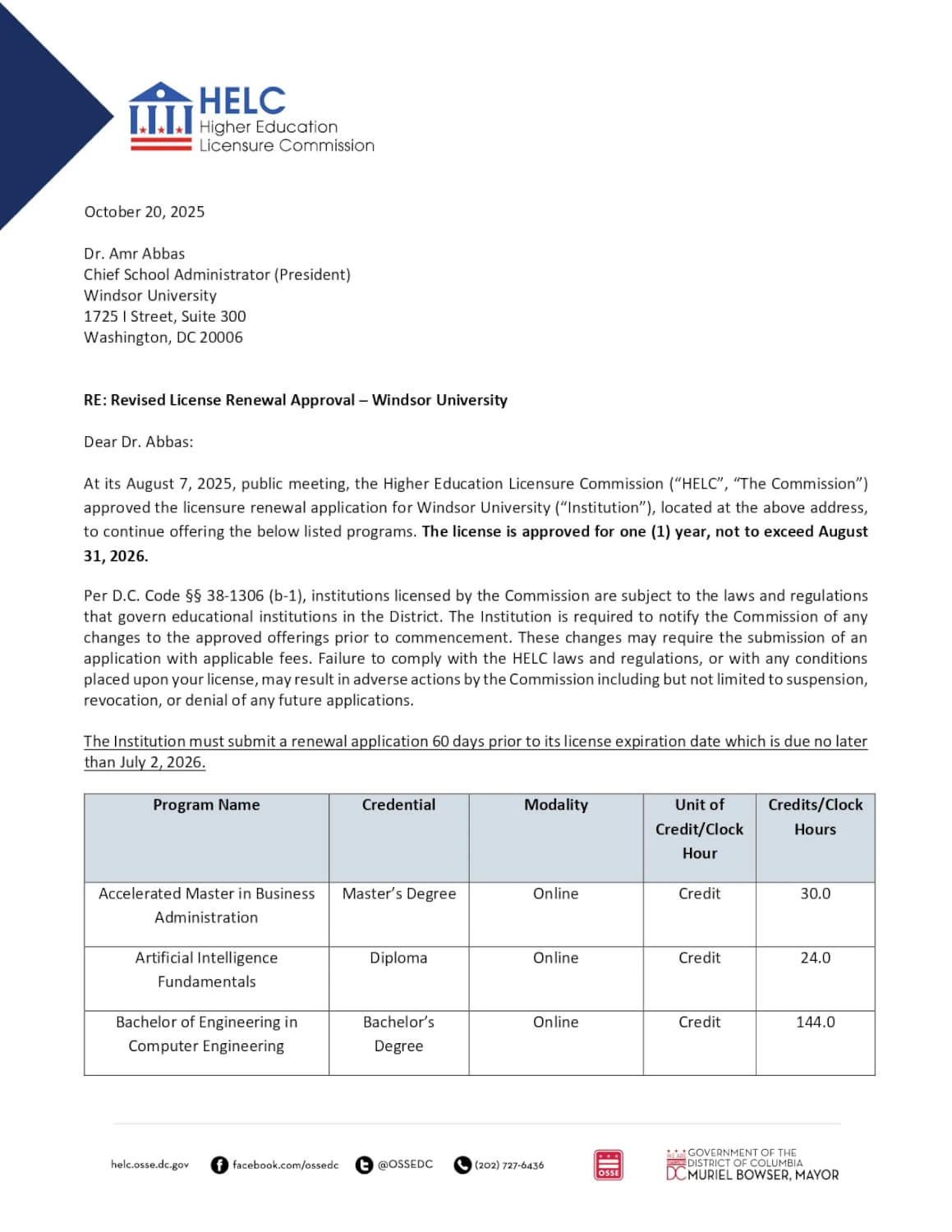
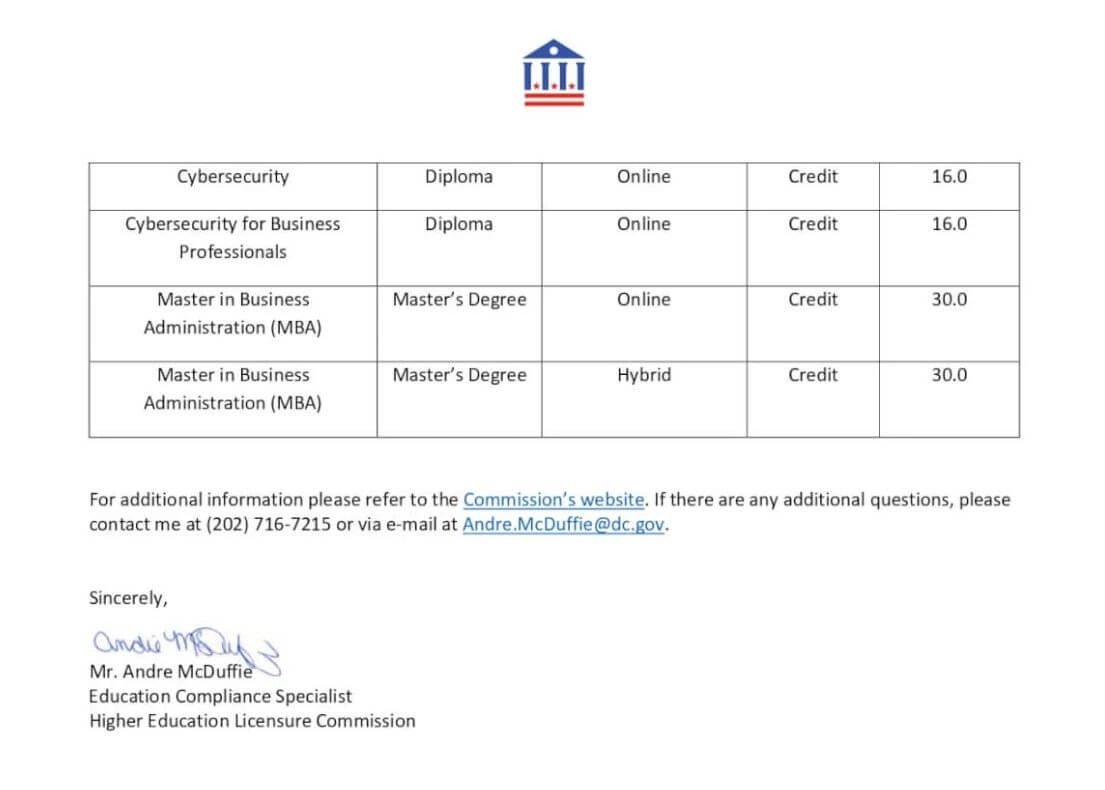
HELC Windsor University official recognition letter
HELC Windsor University recognition continuation page
Regulatory Authority

What is the Higher Education Licensure Commission (HELC)?

Learn how HELC supports legitimate, quality postsecondary education in Washington, DC.

DC GovernmentHigher Education Licensure Commission

HELC’s Role in Washington, DC

The Higher Education Licensure Commission (HELC) is the regulatory and consumer protection body that helps ensure legitimate and quality postsecondary education in Washington, DC. HELC plays a crucial role by authorizing institutions to operate, approving academic programs, and overseeing the issuance or denial of licenses to private postsecondary institutions within the District.
Additionally, HELC helps maintain public trust in higher education by ensuring compliance with laws and regulations, maintaining student records from closed institutions, issuing certified transcripts, and investigating complaints against institutions. The Commission’s focus on quality education safeguards public interest and reinforces the integrity of postsecondary education in the District.

Learn more about HELC’s standards here: HELC Website.

Professional Development

Professional Recognition & Continuing Education

Windsor University academic programs and courses may be used for professional development and continuing education purposes, subject to the policies of relevant professional bodies.
NCEES

Engineers

Coursework may be reported within NCEES records as graduate-level education or continuing education activity, subject to NCEES and state board requirements.

PMI

Project Management Professionals

Business and management courses may be applicable toward PMI Professional Development Units (PDUs) or equivalent requirements, subject to PMI policies.

Applicants are responsible for confirming acceptance and applicability with NCEES, PMI, or other licensing authorities.

Institutional Value

Why Recognition Matters

Recognition supports academic credibility, student confidence, and institutional quality.

Academic Trust & Quality Assurance

Recognition helps ensure that Windsor University meets strict educational standards, offering students a reliable and high-quality academic experience. It signifies that our programs are recognized globally and meet the requirements of employers, licensing boards, and other higher education institutions.

For further details on the various programs we offer, visit our Home Page to explore how you can apply to our programs.

 733 views

Institutional Recognition

Commitment to Academic Quality and Educational Standards

Windsor University is committed to maintaining high academic standards, institutional integrity, and quality educational practices that support student success and professional development.

Institutional recognition reflects the university’s dedication to operating within established educational frameworks while providing students with reliable and professionally focused academic programs across multiple disciplines.

Academic Integrity: Institutional recognition supports educational credibility, academic accountability, and public confidence in the university’s academic operations.
Higher Education Authorization

Recognition Through HELC and OSSE

Windsor University is recognized by the Higher Education Licensure Commission (HELC) and the DC Office of the State Superintendent of Education (OSSE) to operate post-secondary educational programs within Washington, DC.

This recognition demonstrates that the university has met important operational and regulatory requirements necessary to offer undergraduate, graduate, and postgraduate educational opportunities.

Educational Authorization: Recognition through regulatory authorities supports transparency, institutional oversight, and educational accountability.
Regulatory Oversight

The Role of the Higher Education Licensure Commission (HELC)

The Higher Education Licensure Commission (HELC) serves as a regulatory and consumer protection body responsible for overseeing private postsecondary educational institutions operating within Washington, DC.

HELC supports educational quality by reviewing institutional operations, authorizing academic programs, monitoring compliance requirements, and helping maintain public trust in higher education throughout the District.

Quality Assurance: Regulatory oversight helps ensure institutions maintain responsible educational practices and operate according to established standards.
Professional Development Opportunities

Supporting Continuing Education and Career Advancement

Windsor University academic programs and coursework may support continuing education and professional development objectives for individuals pursuing career growth and industry advancement.

Programs related to engineering, business, management, and leadership may align with professional learning requirements established by organizations such as NCEES, PMI, and other professional associations, subject to their individual policies and review standards.

Professional Growth: Continuing education opportunities help students and professionals strengthen skills, expand expertise, and support long-term career development.
Student Confidence and Academic Value

Why Institutional Recognition Matters

Institutional recognition plays an important role in supporting student confidence, academic reliability, and educational transparency. It helps students understand that the university operates within recognized educational and regulatory frameworks.

Recognition also supports the value of academic programs by reinforcing institutional accountability, educational quality standards, and commitment to student-focused learning experiences.

Educational Credibility: Recognition strengthens trust in the institution’s commitment to academic excellence and responsible educational practices.
Academic Excellence and Future Opportunities

Building a Globally Focused Learning Environment

Windsor University continues to support a modern and globally connected educational environment focused on academic accessibility, innovation, and professional preparation for students worldwide.

Through recognized academic operations, flexible learning opportunities, and student-centered educational support, the university remains dedicated to helping learners pursue meaningful academic and professional goals across diverse industries and international communities.

Future Success: Windsor University remains committed to supporting educational advancement, lifelong learning, and professional achievement for students around the world.